Car Overheating Near Roseville on I-80: What to Do First
The Needle Is Climbing and the Next Roseville Exit Is Three Miles Away
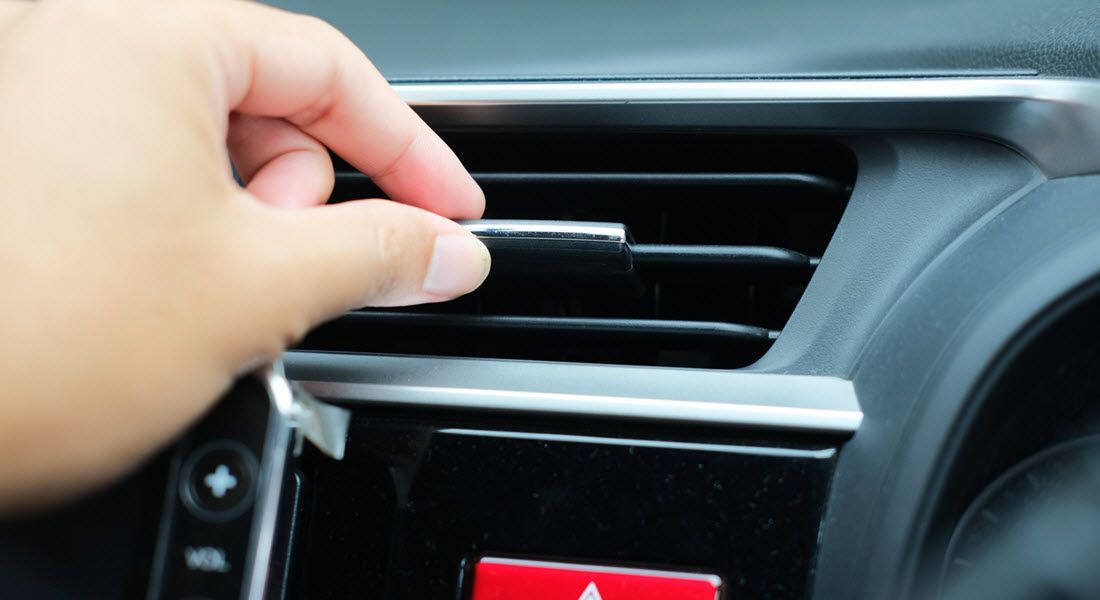
Turn the heater to full hot and the blower to maximum. Do it before you do anything else, including panic. The heater core is a second radiator, and sending cabin air across it pulls real heat out of the engine at the moment you have no other way to shed it. It will make the inside of your Audi, BMW, or Volvo miserable, and it may be the difference between reaching an off-ramp and stopping on the shoulder of I-80. Then get off the road. Everything after that is about limiting what the problem costs you.
Turn the heat on, then stop as soon as you can
With the heater running, watch the needle. If it stops climbing, you have bought yourself a little time and distance. If it keeps going, you have not, and the plan changes from finding a good place to stop to finding any place to stop.
Switch the air conditioning off if it is on. The condenser sits directly in front of the radiator, and running it dumps extra heat into the same airflow the radiator needs. In slow traffic, pull out of the lane that is barely moving if you can do it safely; an engine at a dead stop with the fan running is often cooler than one creeping along in heavy traffic with no airflow at all.
Traffic works against you here in a way people do not expect. The Texas A&M Transportation Institute's 2025 Urban Mobility Report puts
Sacramento commuters at 72 hours of delay each during 2024, up from 69 hours the year before. Crawling traffic on a wet Placer County evening means less air through the radiator and more time spent in exactly the conditions a struggling cooling system handles worst.
Once stopped, shut the engine off and leave the hood closed for a while. A hot system is pressurized well above atmospheric, and opening a cap releases that pressure as a jet of boiling coolant. Nobody wins that argument.
What each extra mile actually costs
The temptation is always to push on. The shop is close, the car is still moving, and stopping is inconvenient. Here is what is happening inside the engine while you make that decision.
European engines are aluminum, and aluminum expands considerably more than the steel fasteners holding the head onto the block. Run it hot enough and the head distorts against the gasket, which is how a cooling fault becomes a head gasket job. Coolant then finds its way into a cylinder or into the oil, and the repair stops being about the cooling system at all.
Oil is the other casualty. It thins as it heats, and past a certain point it stops maintaining the film that keeps bearing surfaces apart. That damage does not announce itself with a noise on the day it happens. It shows up later as low oil pressure or a knock.
There is a plain arithmetic to it. A thermostat, a hose or a water pump is a predictable repair. A head gasket on a modern V6 is not, and an engine is in another category entirely. Driving three more miles to avoid a tow is the worst financial trade available to you at that moment.
→ Radiator repair and replacement
The decision is easier if you have already made it. Pick the stopping point before the needle moves, not while it is moving.
Why it happened, and what we look at afterward
Overheating is a symptom with a short list of causes, and the list is worth knowing because it shapes what you should expect when the car reaches us.
Low coolant is the most common, and it means a leak somewhere — a hose, a radiator seam, an expansion tank, a water pump weep hole, or a heater core. A thermostat stuck closed is next, and it produces a fast, dramatic climb because flow to the radiator has simply stopped. A failed cooling fan or fan control circuit produces the opposite pattern: fine on the highway, hot in traffic. A water pump with a worn impeller circulates less than it should and only reveals itself under load. Air trapped in the system after a previous repair behaves like all of the above at once.
Diagnosis starts with a pressure test on a cold engine, because that answers the leak question without guessing. Then we read live coolant temperature with a scan tool instead of trusting the dash gauge, command the fan on, and watch what the thermostat does as the engine comes up to temperature. The pattern tells us which of the five it is.
After an overheat, there is a second question to answer: what did the heat cost? A compression test and a check for combustion gases in the coolant tell us whether the head gasket survived, and the oil gets inspected for contamination. We would rather find that out on a lift than have you find it out on the 65 next month.
After a Car Runs Hot, Here Is What We Check
If your car has run hot even once, have it looked at before the next trip rather than after it.
Bertinis German Motors — 600 Vernon St, Roseville, CA 95678
bertinis.com
→ Schedule an appointment with Bertinis German Motors